Chainsaw Juice King: Idle Shop
- 4.3
- Rating
- 5.00M
- Installs
- Free
- Price

 Analysis by App-foxy
Chainsaw Juice King: Idle Shop caught my attention because it turns a very simple idea into a surprisingly busy little arcade routine. I cut fruit, turn it into juice, improve the shop, and gradually build a larger business around that loop. It is easy to understand within a few minutes, but the more important question is whether that first burst of progress remains enjoyable once the novelty wears off. After spending time with it, my answer is mixed: it is a pleasant short-session game with a clear sense of momentum, yet its long-term appeal depends heavily on how much repetition you can tolerate.
The game comes from SayGames Ltd and is free to start. It is listed for Everyone, so the bright visual style and uncomplicated controls are suitable for a broad audience. The current version is 1.10.0, and it runs on devices using Android 8.0 or later. That makes it fairly approachable if you want a casual game that does not demand a powerful, recent phone.
Why the first week feels so satisfying
The opening hours are built around immediate feedback. A piece of fruit becomes juice, juice contributes to the shop, and the shop gives you another reason to keep improving the operation. I never had to study a complicated tutorial or memorize a large set of rules. The game communicates its priorities through movement, visual changes, and the steady appearance of another upgrade or task.
You May Also Like

 Blood Strike: 2.5 Anniversary
Blood Strike’s Loadouts Turn Every Drop Into a Tactical Gamble
A close look at Blood Strike’s custom loadouts: how fast access to signature weapons reshapes its battle royale rhythm, rewards preparation, and narrows the gap between fights.

 Pandora - Music & Podcasts
Pandora’s Music Is Easy to Start, but Harder to Recover
Pandora’s strength is its low-effort path from a seed to a station. Its weak spot is how much confidence it asks you to place in connection, setup, and quiet recovery.

 8 Ball Pool
 Is Built on Rivalries, Rematches, and Routine
A close look at the rivalries, rematches, shared routines, and unanswered safety questions that turn a quick pool match into a persistent mobile community.

 Samsung Music
’s Quiet Strength Is Playing What You Already Own
Its reach comes less from spectacle than from dependable access to a personal library. That simplicity is both the app’s strongest retention engine and its ceiling.

 AccuWeather: Weather Radar
AccuWeather Review: A Quick, Clear Forecast for Everyday Decisions
For everyday plans, the best forecast is the one you can understand quickly. AccuWeather makes rain timing, radar, and local conditions easy to act on, with a few trade-offs.

 Hill Climb Racing
Why Hill Climb Racing Still Turns Crashes Into One More Run
A tiny car, a bumpy hill and one more upgrade: Hill Climb Racing keeps resurfacing because its simple chaos makes every near-miss feel personal.
More From Our News Desk



That clarity is the strongest part of the experience. When I have only a few minutes to spare, I can open the game, make visible progress, and close it without feeling that I have abandoned a complicated strategy. It works particularly well during a commute, while waiting for food, or in those short breaks when a full arcade session would be too much commitment.
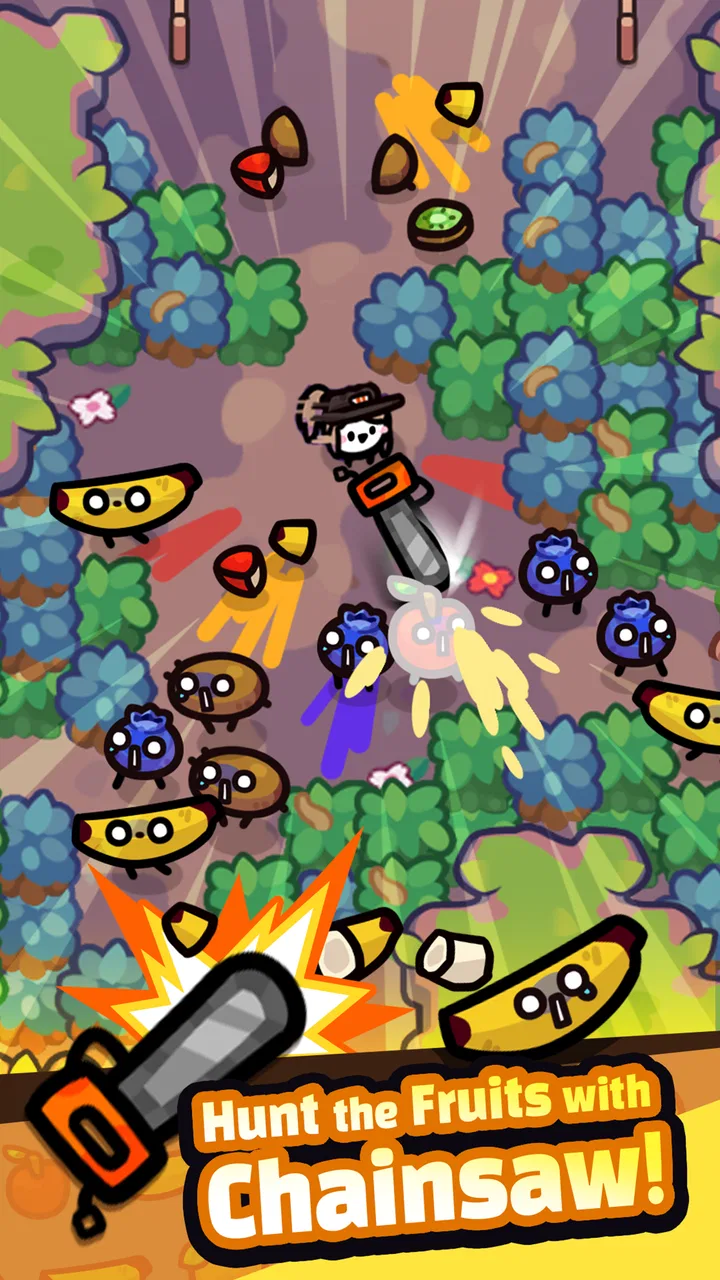
The chainsaw theme gives the otherwise familiar shop-building formula a distinctive identity. Cutting fruit with a chainsaw is deliberately exaggerated rather than realistic, and that playful contrast helps the game stand out from ordinary idle business games. The presentation is cheerful and uncomplicated, which matches the accessible tone of the gameplay.
During the first week, the combination of harvesting, processing, and expansion creates a satisfying rhythm. I usually begin with a small objective, complete it quickly, and then notice that the next improvement is already within reach. That sequence is effective because it avoids making the early game feel like a long wait. Progress arrives often enough to encourage another short session.
One useful habit is to decide what kind of progress matters before spending attention on every available action. If I chase every small improvement equally, the screen can start to feel busy without giving me a clear sense of direction. I get more enjoyment by treating each session as a focused run: first improve the part of the operation that is slowing me down, then collect the reward and stop when the next step becomes repetitive.
This is also where the game differs from a traditional arcade title. A classic arcade game usually asks me to improve reflexes, timing, or a high score. Here, the satisfaction comes less from mastering a difficult move and more from watching a small production chain become more capable. Players looking for quick action may find the pace too gentle, while people who enjoy visible growth can settle into it immediately.
The audience response suggests that the game has found a substantial casual audience, with more than five million installs and an average rating of 3.5 from roughly seventy thousand ratings. Those figures make it clear that the concept has broad reach, but they also suggest a divided experience rather than universal enthusiasm. My own impression fits that pattern: the first sessions are inviting, while the longer-term questions are harder to answer.
What I learned by playing in short sessions
The best everyday use case is not an extended evening of uninterrupted play. I found it more comfortable as a small routine. I would open it once or twice during the day, handle the available work, make one meaningful improvement, and leave. That approach keeps the production theme relaxing instead of turning it into another obligation.
Short sessions also make the game’s pacing feel more generous. When I stay too long, I become more aware of repeated actions and waiting between meaningful decisions. When I return briefly, the same loop feels like a tidy break. This is an important distinction for anyone deciding whether to install it: the game is better as a pocket-sized habit than as a main gaming destination.
Another practical tip is to avoid treating every reward as a reason to continue immediately. The game is designed around frequent encouragement, and that can make a session stretch beyond the point where it is still fun. I get more value when I stop after a clear milestone rather than pushing through several nearly identical upgrades.
What remains after the novelty fades
The month-to-month question is more complicated. The central loop remains understandable, but understanding is not the same as depth. Once the initial shop expansion loses its surprise, the experience depends on whether the repeated actions still feel rewarding. For me, the answer varies with mood. On a tired day, the simplicity is welcome. On a day when I want a stronger challenge, it feels thin beside a more strategic management game or a skill-focused arcade alternative.
The game’s long-term value comes from its low friction. I do not need to remember a complicated story, coordinate with other players, or prepare for a demanding challenge. I can return after a break and immediately understand what I was doing. That makes it more forgiving than many games that punish an irregular schedule.
At the same time, low friction can become low involvement. If you prefer games that keep revealing new mechanics, changing the rules, or testing your decision-making, this may not hold your attention for months. The shop and farm theme gives the loop a pleasant frame, but the frame cannot hide repetition forever.
I would compare it with two familiar alternatives. Against a conventional arcade game, it offers less pressure and more progression, but also less mechanical mastery. Against a standard idle business game, it has a more playful harvesting identity and a livelier premise, yet it may feel less satisfying to someone who wants detailed economic planning. The right choice depends on whether you value immediate actions or layered decisions.
There is also a useful middle ground for families. Because it is rated Everyone and the basic idea is easy to explain, a child or a casual player can understand the objective without needing a long explanation. However, adults should still remember that free games with optional purchases can encourage repeated spending, especially when progress is presented as a series of tempting improvements.
Those purchases range from $0.99 to $99.99 per item. I would approach that range carefully. The free entry point is enough to judge whether the loop suits you, so I would not spend money during the first sessions simply because an upgrade looks convenient. If the game becomes part of your regular routine, set a personal limit before the small purchases begin to feel automatic.
The maintenance cost is mostly your attention
For a game built around an idle shop, the main maintenance burden is not complicated setup; it is the need to keep checking in if you want to preserve the feeling of momentum. The more often I return, the more smoothly the progression seems to move. But that same design can make the game feel like a small task list rather than a source of spontaneous fun.
I recommend deciding in advance whether you want a relaxed check-in game or a title you play whenever you feel inspired. Chainsaw Juice King: Idle Shop is more comfortable in the first role. If I expect every session to deliver a fresh challenge, I become impatient. If I treat it as a light routine, the uncomplicated loop makes more sense.
Maintenance also includes managing expectations around progress. The early game gives frequent signs that the business is growing, while later sessions naturally make each improvement feel less dramatic. That change is common in idle-style games, but it matters here because the core actions remain familiar. The longer you play, the more important it becomes to enjoy the process itself rather than only the next unlock.
My most effective approach is to use a simple stopping rule. I play until I complete one meaningful objective, then I leave instead of searching for another reward. This keeps the game from consuming time through tiny, low-value actions. It also makes returning later feel more appealing because I have not exhausted the loop in one sitting.
Players who dislike notifications, repeated collection, or games that encourage frequent returns should think carefully before installing. Even when the actions are easy, the habit can become irritating if it interrupts your day. On the other hand, anyone who enjoys checking a small virtual business and seeing gradual improvement may find the routine comforting.
Where fatigue begins
The biggest source of fatigue is repetition without a strong sense of choice. Cutting fruit and improving the business is charming at first, but the charm depends on the feeling that each action changes the situation. When several sessions produce similar results, I start noticing the structure behind the presentation.
Another limitation is that the game does not replace a deeper management simulator. I would not choose it when I want to compare multiple business strategies, balance a complex economy, or make decisions with serious consequences. Its appeal is immediacy, not detailed planning. That is not a flaw for its intended audience, but it is a clear boundary.
The same applies to arcade fans. If your favorite part of an arcade game is precise timing, escalating difficulty, or chasing a personal best, the shop-building layer may feel like a distraction. The chainsaw gives the game an energetic visual hook, but the overall experience is more about progression than reflex performance.
The rating of 3.5 helps set a realistic expectation. This is not a universally loved essential, and I would not present it as one. It is a competent casual game whose appeal is strongest when its simple loop matches your available time and mood. The roughly three thousand four hundred written reviews also point to an active conversation around the experience, but the practical takeaway is more important than the raw response: try the free version before deciding whether it deserves regular attention.
There is a trade-off between convenience and satisfaction. The game is convenient because it is easy to enter, easy to understand, and free to download. It can be less satisfying when I want a sense of discovery that lasts beyond the opening stretch. I would rather see it as a small, disposable pastime than force it into the role of a long-term favorite.
Who should keep it installed?
I think it is a good fit for someone who likes colorful arcade games with light business progression, especially if that person prefers short sessions over demanding play. It also suits players who enjoy watching a modest operation grow without learning a complicated system. The free starting point makes it simple to test, and the Everyone rating makes it broadly approachable.
I would skip it if you want a story-driven game, a competitive leaderboard challenge, or a management title with substantial strategic depth. I would also skip it if optional purchases make you uncomfortable or if you know that frequent check-ins quickly become a chore. A more traditional arcade game will be better for reflex practice, while a deeper simulator will be better for planning and long-term decision-making.
For parents considering it for a younger player, the accessible presentation is a positive, but I would still discuss in-app purchases before handing over the device. The game is free, yet individual purchases can reach $99.99, so the financial side deserves the same attention as the age label.
One final practical point is device compatibility. Since Android 8.0 is the minimum operating system, people using older phones should check their software before looking for it. For compatible devices, the modest technical requirement supports its role as an easy game to keep available for spare moments rather than a demanding showcase title.
My long-term verdict
After the first-week excitement, Chainsaw Juice King: Idle Shop earns lasting space only if you enjoy repetition as a form of relaxation. I like its clear loop, playful chainsaw theme, and ability to turn a few spare minutes into visible progress. I also appreciate that I can return after a break without feeling lost.
Still, I would not call it a permanent mainstay for most players. The repeated harvesting and upgrading eventually expose the limited depth, and the maintenance rhythm can feel like a responsibility if you play too often. Its strongest place is as a secondary game: something to open when you want a gentle distraction, not the title you rely on for fresh challenges every evening.
My recommendation is to try it free, keep sessions deliberately short, and judge it by the routine rather than the opening rush. If watching a small juice business grow feels satisfying even after the first upgrades, it can remain a pleasant companion. If the actions already feel repetitive during the trial period, no amount of shop expansion is likely to change your mind. With an average rating of 3.5, the game’s position feels fair: enjoyable, accessible, and distinctive enough to sample, but not deep enough to recommend without qualification.
For me, the lasting value is modest but real. I would keep it installed for occasional breaks, especially when I want something lighter than a traditional arcade challenge. I would not spend heavily to accelerate it, and I would not build my daily gaming habit around it. That balance captures what the game does best: it makes a small, cheerful business loop easy to pick up, while leaving the player to decide whether that loop is enough to keep coming back.
FAQs for Chainsaw Juice King: Idle Shop
01What is the main objective of Chainsaw Juice King: Idle Shop?
Chainsaw Juice King: Idle Shop is an idle simulation game where your goal is to manage and expand your juice shop empire. You'll start with a small operation and work your way up by producing unique fruit juices, upgrading equipment, and hiring workers to optimize production and maximize profits.
02Is Chainsaw Juice King: Idle Shop free to play?
Yes, Chainsaw Juice King: Idle Shop is free to download and play. However, the game offers in-app purchases that allow you to buy premium items, speed up progress, and enhance gameplay. These purchases are optional, and players can enjoy the game without spending real money.
03What platforms is Chainsaw Juice King: Idle Shop available on?
Chainsaw Juice King: Idle Shop is available on both Android and iOS platforms. You can download it from the Google Play Store for Android devices and the Apple App Store for iOS devices. Ensure your device meets the minimum requirements for smooth gameplay.
04How does the idle feature work in Chainsaw Juice King: Idle Shop?
The idle feature allows your juice shop to continue generating income even when you're not actively playing the game. This means you can close the app and return later to collect earnings, making it a convenient option for those who enjoy incremental progress without constant engagement.
05Are there any social features in Chainsaw Juice King: Idle Shop?
Yes, Chainsaw Juice King: Idle Shop includes social features that allow you to connect with friends. You can compete on leaderboards, share achievements, and even participate in special events or challenges together. This adds a competitive and collaborative aspect to the game.
Pros
- Engaging idle gameplay with strategic elements.
- Colorful graphics that enhance user experience.
- Frequent updates with new content and features.
- Simple controls make it accessible for all ages.
- Offline play supported for uninterrupted fun.
Cons
- Can become repetitive over extended play.
- In-app purchases may be necessary for faster progress.
- Occasional ads can interrupt gameplay.
- Limited social interaction features.
- Requires a stable internet connection for updates.

Chainsaw Juice King: Idle Shop
Gallery